春节
Spring Festival, from reunion dinner to lantern night
Spring Festival, also called Chinese New Year, begins on the first day of the first lunar month. In 2027, that date is Saturday, February 6.
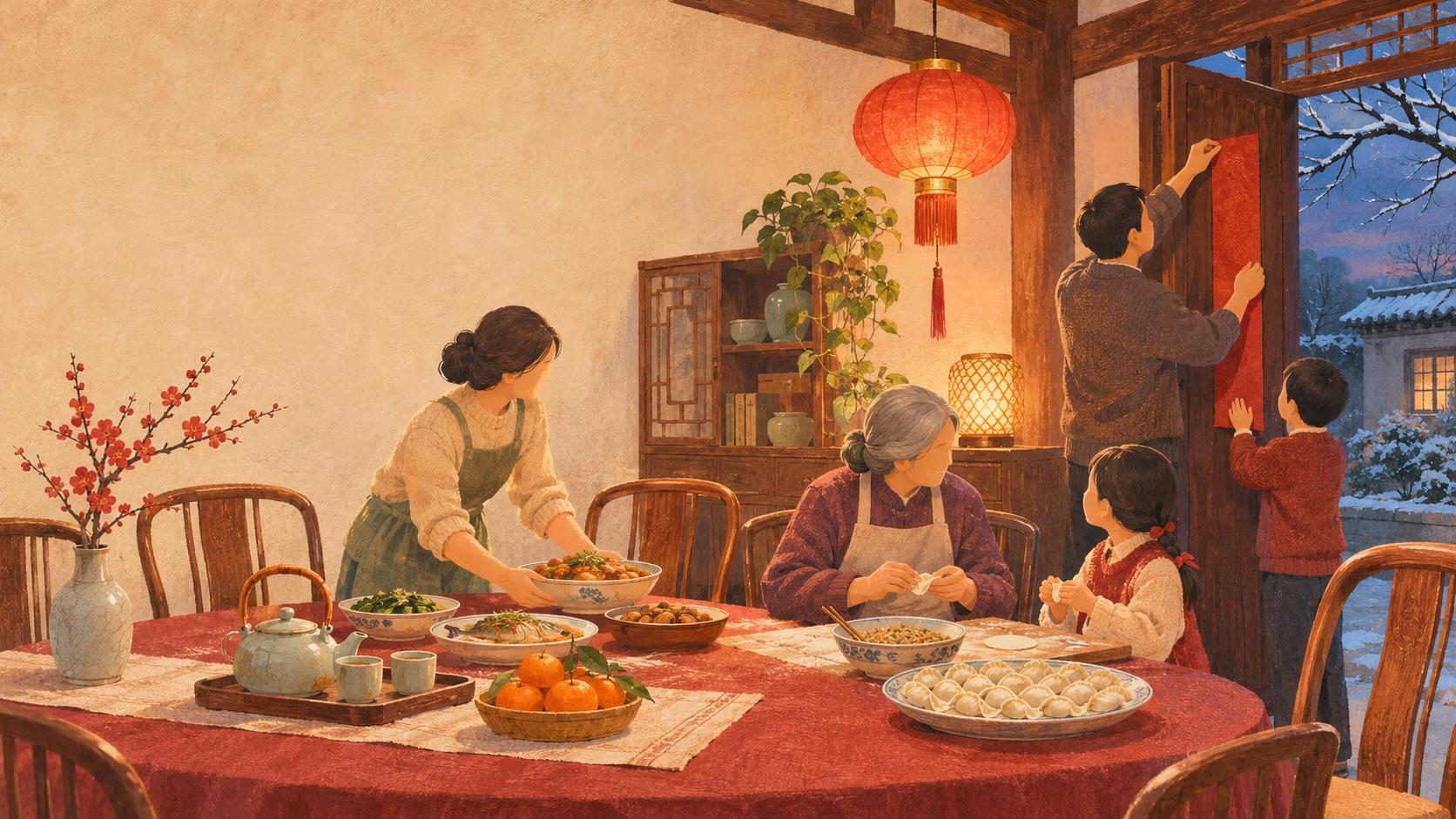
More than New Year’s Day: a season of preparation and reunion
Calling Spring Festival “Chinese New Year” is useful, but the phrase can make the festival sound like a single date. In practice, many households begin preparing before New Year’s Eve: cleaning, buying food, arranging travel, making decorations, and reconnecting with family. The first day of the first lunar month is the calendar boundary, while the festival season continues through the Lantern Festival.
This long rhythm helps explain why reunion matters so much. A New Year’s Eve meal, known in different places by names such as the reunion dinner, is not simply a menu. It is an occasion for relatives to gather, make space for those returning from elsewhere, and mark the passage from one year to the next.
Spring Festival timeline for 2027
Jan 30 or 31
Little New Year
小年
Many families begin their final preparations. The customary date varies by region.
Feb 5
New Year’s Eve
除夕
Families gather for the reunion dinner and some stay up to welcome the new year.
Feb 6
New Year’s Day
正月初一
The first lunar month begins. Families may exchange greetings and visit relatives.
Feb 20
Lantern Festival
元宵节
On the fifteenth day of the first lunar month, lantern displays mark the close of the traditional New Year season.
The mainland public holiday runs February 5–13. See the official holiday schedule. Source: Hong Kong Observatory 2027 calendar.
What four Spring Festival customs mean
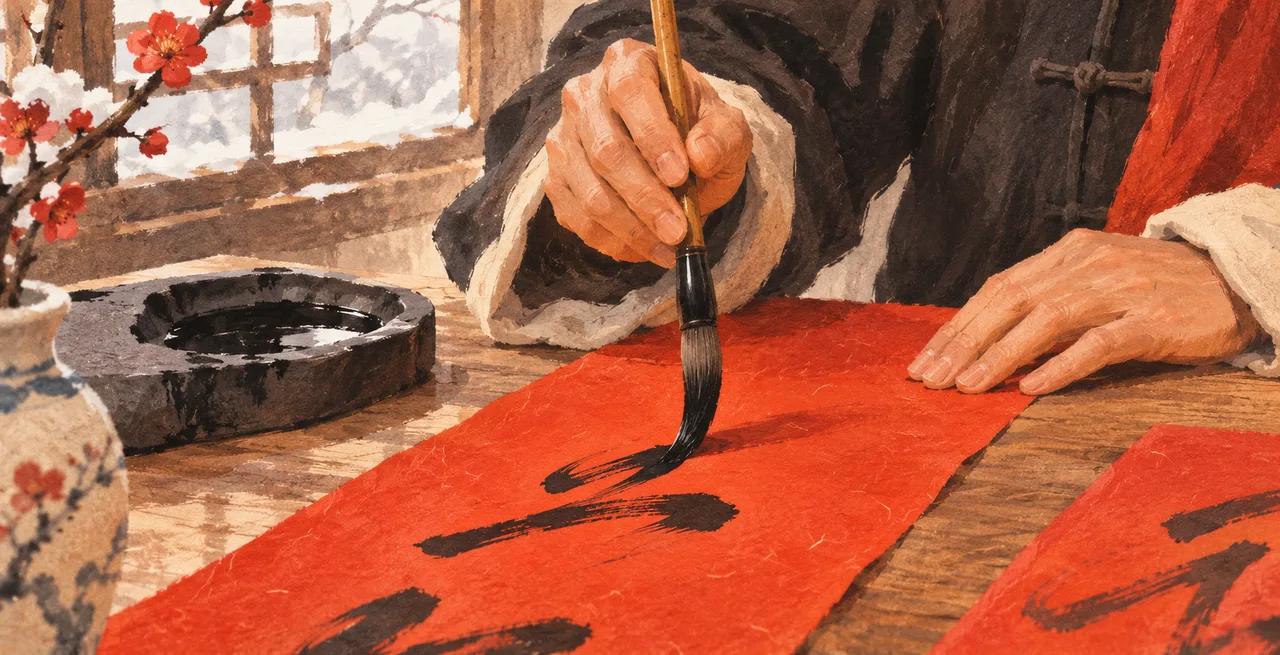
Spring couplets
春联
Paired lines of verse frame a doorway with wishes for the household in the coming year.
Reunion dinner
年夜饭
The meal gathers relatives on New Year’s Eve. Fish can express a wish for abundance because yú (鱼, fish) sounds like yú (余, surplus).
New Year visits
拜年
Relatives and friends exchange greetings. Who visits whom and when depends on local and family practice.
Lucky money
压岁钱
Elders often give children money in red envelopes as a New Year blessing.
Source: Spring Festival cultural research.
Red paper, food, and greetings: how wishes become visible
Spring Festival customs often turn hopes for the coming year into things people can see, eat, and say. Red couplets at the door, lanterns, family meals, greetings, and gifts are all social signals of welcome and good wishes. Their exact wording and form are regional and familial rather than universal.
Food also carries layered meanings. Fish, dumplings, rice cakes, sweet foods, and regional specialities may be chosen for sound-based wordplay, local history, seasonal availability, or simply family preference. It is more accurate to say that food traditions express wishes in many ways than to assign one fixed meaning to every dish.
- Spring couplets and door decorations make the home a visible site of welcome for the new year.
- New Year greetings connect younger and older relatives, friends, neighbours, and colleagues.
- A red envelope is a customary gift in many families, but its form and meaning are shaped by the relationship and local practice.
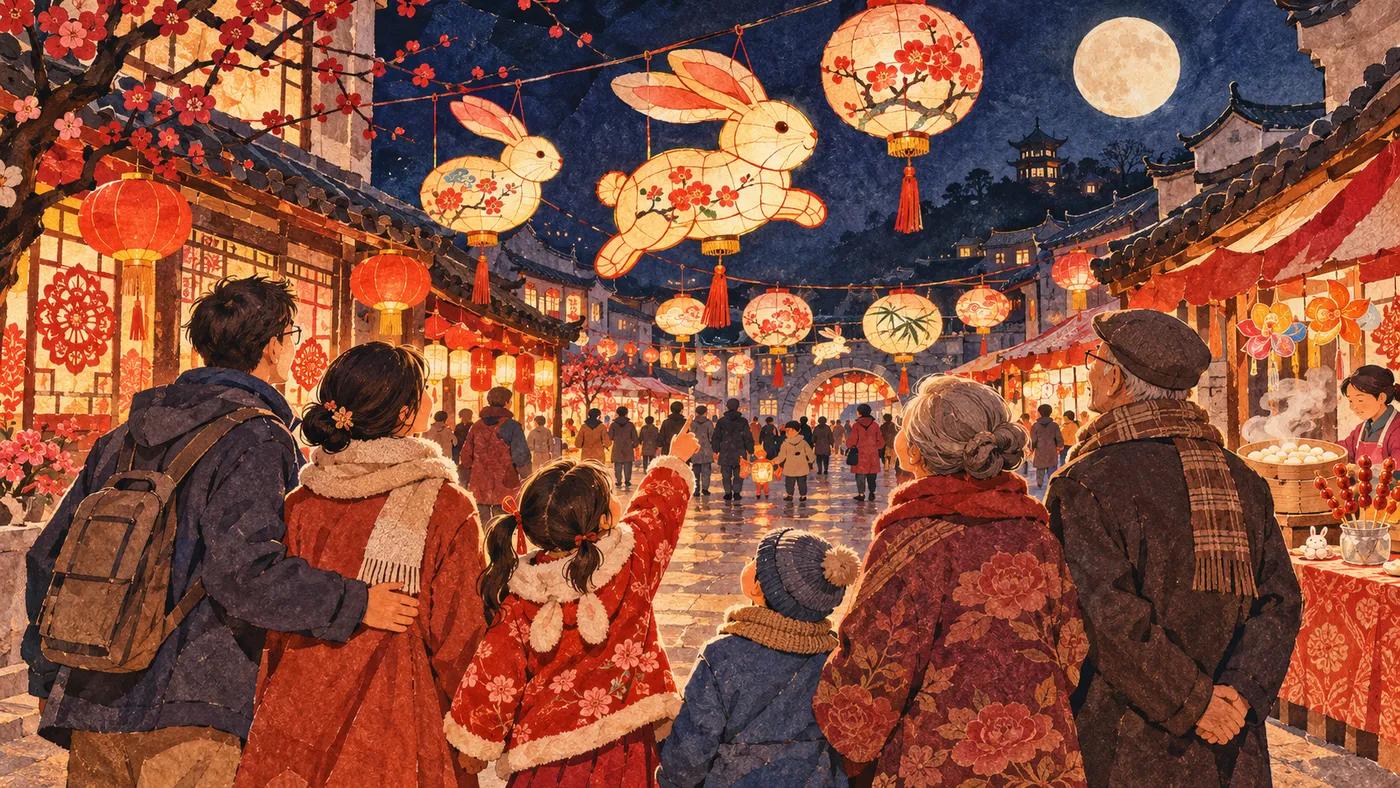
Regional traditions are the point, not an exception
There is no one “correct” Spring Festival meal or programme. Northern and southern food traditions are often contrasted, but the real picture is far richer: cities, villages, diaspora communities, and individual families adapt the festival to local ingredients, travel patterns, work schedules, and inherited customs.
When joining a celebration, the most respectful approach is to ask what a specific family or host values. Some gatherings centre on visiting relatives; others on temple fairs, lion or dragon dances, community dinners, or a quiet meal at home. All can belong to the living tradition.
Because the Chinese calendar is lunisolar, the first day of its first month moves on the Gregorian calendar. This is why Spring Festival can fall in January or February. The 2027 mainland break runs February 5–13. See the Chinese New Year holiday schedule.
How did Spring Festival customs stage the change from one year to the next?
Researcher Ji Zhongyang discusses the New Year as a sequence of practices. On New Year’s Eve, a household might put up door decorations, gather for the reunion meal and stay awake to see in the year, a custom called shousui (守岁). These acts mark the end of the old year in the space where family members gather.
After the calendar turns, the direction changes. Bainian (拜年), exchanging New Year greetings, takes people out to see relatives and neighbours. In Huadu, Guangzhou, local accounts place handing out lai see, visiting flower markets and lion dancing within this longer season. The local example helps explain why a single meal or a nationwide schedule cannot describe every household’s Spring Festival.
Questions about Spring Festival
When is Spring Festival in 2027?
Spring Festival, also called Chinese New Year, begins on the first day of the first lunar month. In 2027, that date is Saturday, February 6.
What is shousui on Chinese New Year’s Eve?
Shousui (守岁) is the custom of staying awake to see out the old year and welcome the new one. Some families keep watch together after the reunion meal.
Why do people eat fish at a Chinese New Year reunion dinner?
Fish (鱼, yú) sounds like surplus (余, yú) in Mandarin. Serving fish can express a wish for abundance in the coming year. Reunion dinners and their dishes vary by family and region.
How long does Spring Festival last in 2027?
Chinese New Year starts on February 6, and the traditional New Year season is commonly said to close with the Lantern Festival on February 20. The official mainland China holiday break is February 5–13.
Sources and editorial scope
- Hong Kong Observatory Almanac 2026 — Calendar table covering January–December 2027.
- UNESCO: Spring festival, social practices of the Chinese people in celebration of traditional new year — UNESCO decision and cultural description.
- National Office for Philosophy and Social Sciences: Spring Festival as living cultural transmission — Research overview of historical development, family practices, and cultural meaning.
- State Council: 2027 public-holiday arrangement — Official mainland China public-holiday schedule.
- Chinese traditional festivals calendar
- Zodiac Compass methodology and calculation sources — explains the calendar range used for dates on this site.
This page is a cultural and calendar reference. It does not claim that one legend, custom, or local practice represents every Chinese community.