中秋节
Mid-Autumn Festival: the moon over the family table
People share mooncakes, look up at the autumn moon and think of those who cannot be at the same table.
Mid-Autumn Festival falls on the 15th day of the eighth lunar month. In 2027, it falls on Wednesday, September 15.
Explore the history and local traditions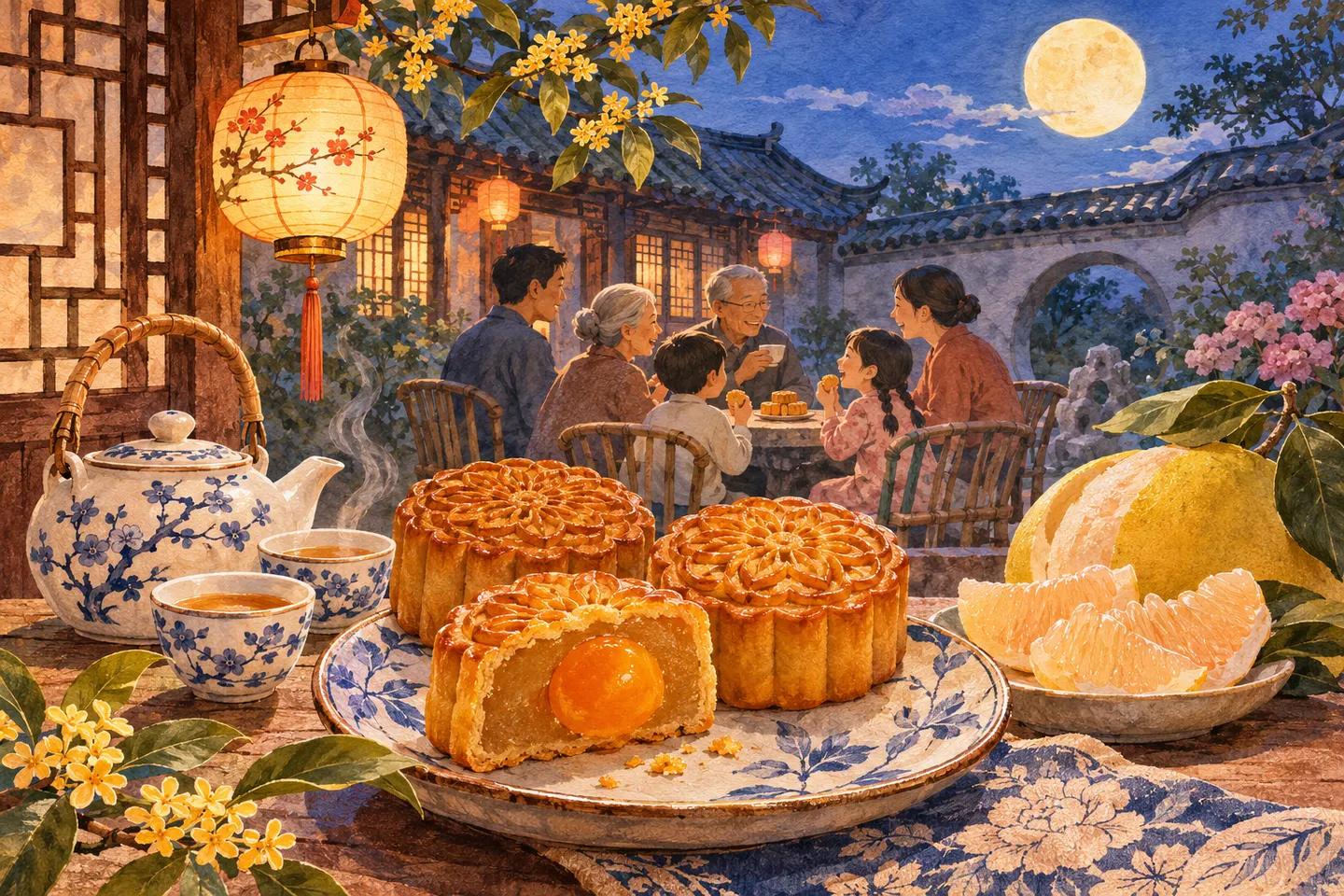
How moon viewing became a family occasion
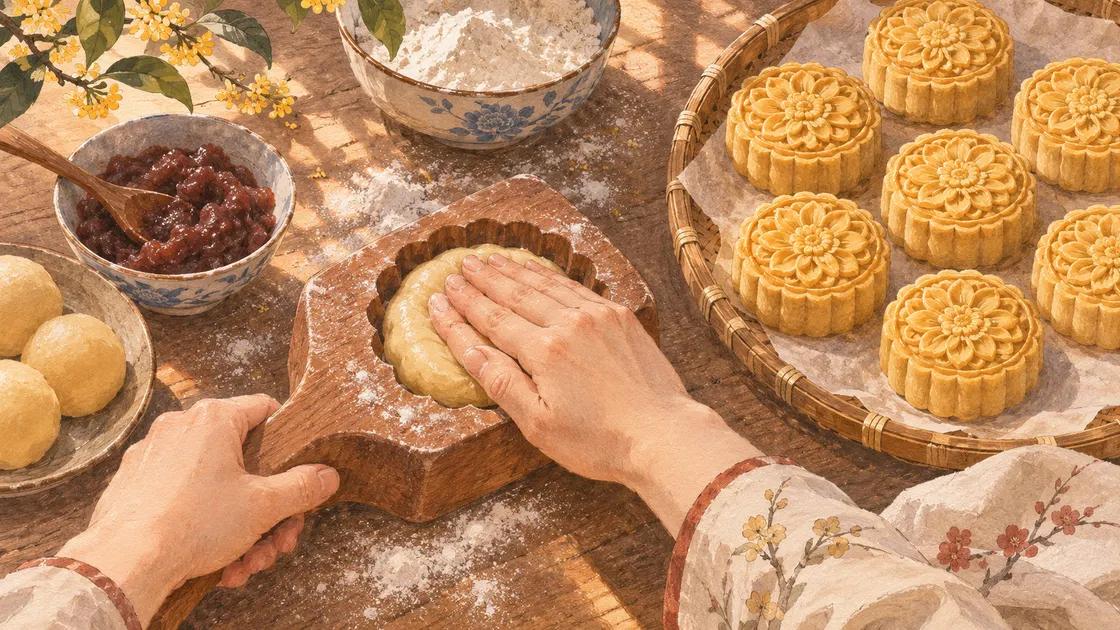
Accounts of the Song period describe urban crowds going out to watch the moon, while historical research traces how seasonal gatherings expanded into a festival celebrated by families. Moon viewing can take place at home or outside. Sharing a mooncake turns the idea of reunion into a gesture people can carry out together, or send to someone who lives far away.
Chang’e and the moon
In a familiar folktale, Chang’e takes an elixir of immortality and rises to the moon. Versions differ in why she takes it and whether her husband Hou Yi is present. The figure of a woman separated from home gives the bright moon a different emotional register: it can stand for distance as well as reunion.
From looking to sharing
- Look up
- Moon viewing centres the evening on the fifteenth night of the eighth lunar month.
- Cut and share
- Families may slice a mooncake into portions. People also give whole boxes as seasonal gifts.
- Remember someone far away
- The same moon is a familiar image for connection across distance.
The eighth-month full moon is a lunar-calendar date, so Mid-Autumn Festival moves on the Gregorian calendar each year. Mooncake styles, regional foods, family practices, and public events vary. The festival’s cultural meaning is broader than any one legend or food.
The history behind Mid-Autumn Festival
How did Mid-Autumn moon viewing become a public occasion?
An evening spent looking at the moon can seem entirely private. Accounts from the Song describe another setting: people in the city went out to places where they could take in the moon, and establishments serving food and drink became part of the evening. A clear view was something people sought together. The night linked households to the wider social life of the city.
Later records also describe the circulation of food, especially gifts of mooncakes. One person could take part by visiting a relative, dividing a cake at dinner or sending one to another household. The public pleasures of being out at night and the private pleasures of sharing at home could both grow around the same date.
Research on the development of Song-era and later Mid-Autumn customs
Why does the Chang’e story make the moon a symbol of distance?
In the version described by Beijing’s cultural portal, Hou Yi has an elixir of immortality. Someone tries to take it while he is away. Chang’e swallows it and rises to the moon. When Hou Yi returns and learns what happened, he sets out food she liked and remembers her from below. The food in this version carries a private memory. It is addressed to a person who is suddenly out of reach.
The folk story sits alongside the festival’s association with reunion. Someone can see a round moon at the same time as a distant family member, yet still feel the distance between them. For readers comparing variants, the important detail is why Chang’e takes the elixir. Different answers change her role in the story and the meaning of the separation.
Beijing cultural portal’s Chang’e retelling and Mid-Autumn customs
Why does Hong Kong’s Tai Hang celebrate Mid-Autumn with a fire dragon?
The Intangible Cultural Heritage Office records a local tradition in Tai Hang, once a Hakka village. In the story told about its beginnings, residents made a dragon and covered it in incense sticks during a time of illness. They carried it through their village around Mid-Autumn. The story explains the procession as a community act seeking peace and safety.
The recorded observance spans the fourteenth, fifteenth and sixteenth nights of the eighth lunar month. It shows how one neighbourhood builds a different kind of festival around the same date. A family sharing mooncakes may celebrate in a courtyard. A procession depends on people preparing an object together and carrying it through shared streets. Both belong within the wider festival.
Hong Kong Intangible Cultural Heritage Office on the Tai Hang Fire Dragon Dance
Questions about Mid-Autumn Festival
When is Mid-Autumn Festival in 2027?
Mid-Autumn Festival falls on the 15th day of the eighth lunar month. In 2027, it falls on Wednesday, September 15.
Why do people eat mooncakes at the Mid-Autumn Festival?
Sharing mooncakes is associated with reunion and exchanging good wishes. A round cake can evoke the full moon, while shapes, fillings and ways of serving it vary by region.
What is the Tai Hang Fire Dragon Dance at Mid-Autumn?
It is a neighbourhood tradition in Hong Kong in which participants carry a dragon covered with incense sticks. The heritage office records it as a three-night observance around the fifteenth day of the eighth lunar month.
Who is Chang’e in the Mid-Autumn Festival story?
Chang’e is the woman who rises to the moon after taking an elixir of immortality in a Chinese folktale. Retellings differ about why she takes it and how her husband Hou Yi responds.
What is the difference between Mid-Autumn Festival and Lantern Festival?
Mid-Autumn falls on day 15 of the eighth lunar month and is associated with moon viewing and mooncakes. Lantern Festival falls on day 15 of the first lunar month and is associated with New Year lantern displays and rice balls.
Sources and editorial scope
- Hong Kong Observatory Almanac 2026 — Calendar table covering January–December 2027.
- Research on the Chinese traditional festival system
- Minhou County’s account of autumn festival customs
- Beijing cultural overview of Mid-Autumn and the Chang’e folktale
- Zodiac Compass methodology and calculation sources — explains the calendar range used for dates on this site.
This page is a cultural and calendar reference. It does not claim that one legend, custom, or local practice represents every Chinese community.