端午节
Dragon Boat Festival on the banks of the river
Dragon Boat Festival falls on the fifth day of the fifth lunar month. In 2027, it falls on Wednesday, June 9.
Explore the history and local traditions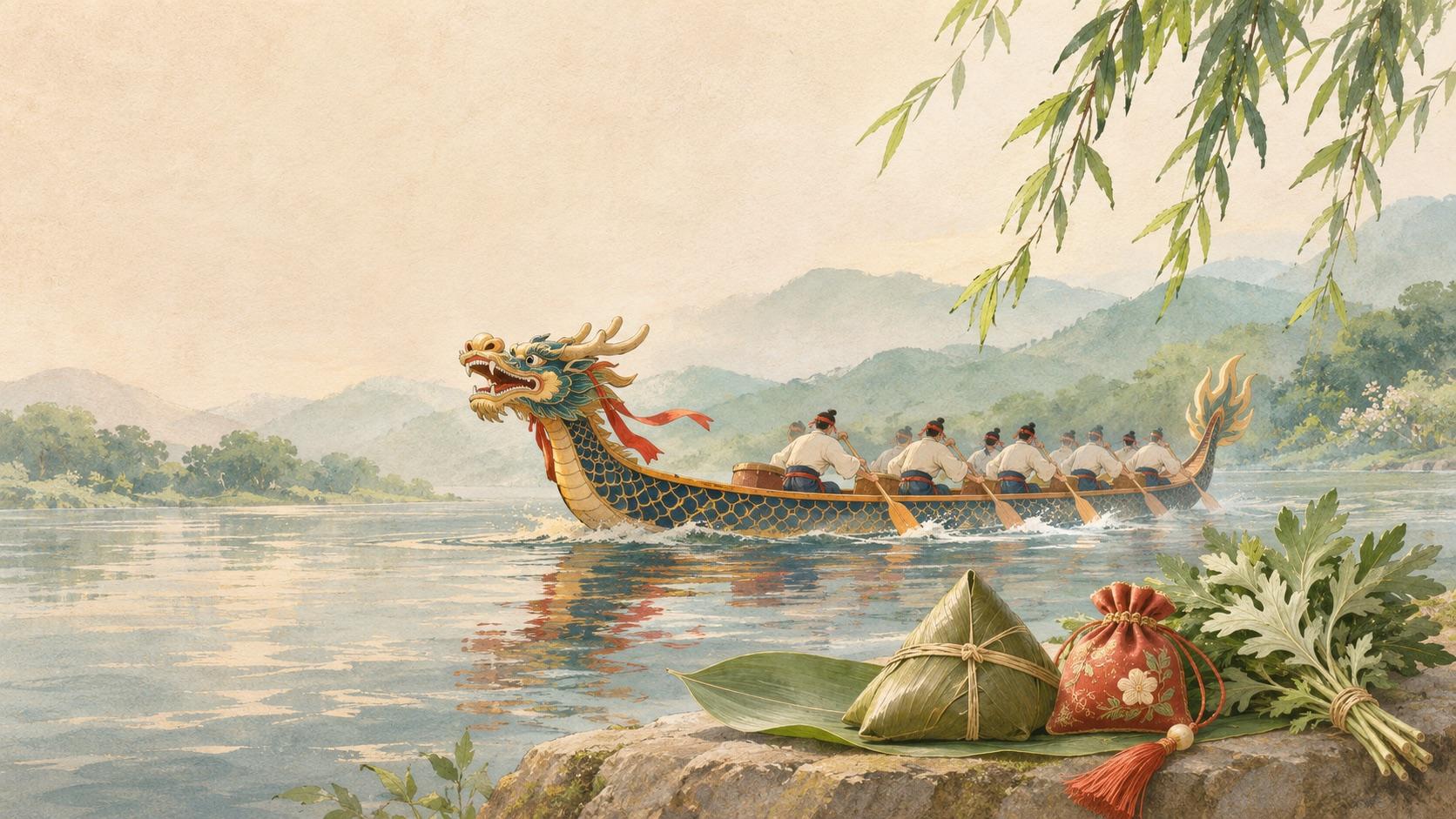
Why dragon boats are more than a race
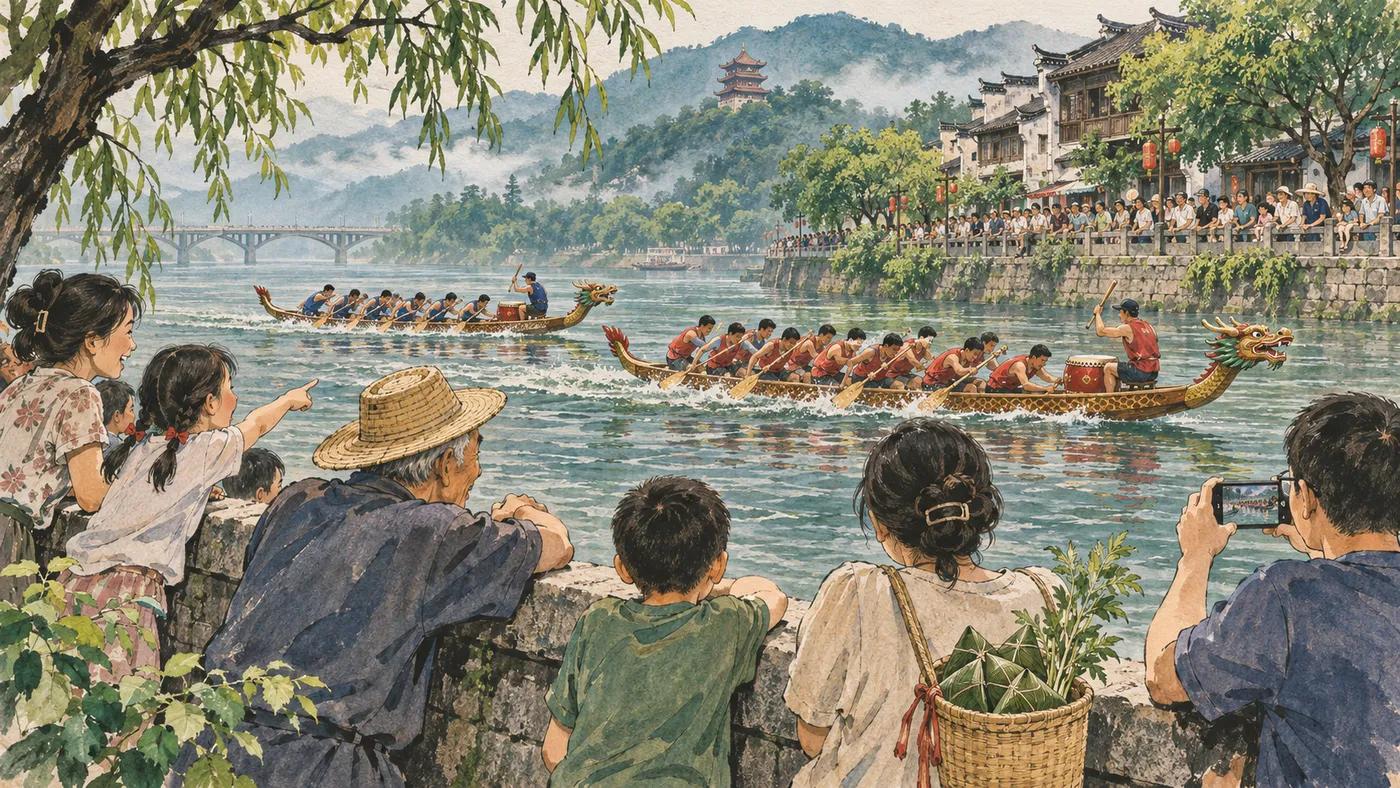
Dragon-boat racing is the festival’s most visible public tradition. It combines teamwork, rhythm, river or coastal life, spectatorship, and—in some communities—ceremonies before boats enter the water. The race is not performed in one standard form across China or across overseas Chinese communities.
For example, heritage descriptions from the Qu Yuan home region include rites, commemorative activities, boat-launch practices, racing, poetry gatherings, and harvest celebrations. That is a useful reminder that “watch a dragon boat race” is only the surface of a larger local festival programme.
- Community crews practise and race together; the activity is collective rather than an individual display.
- Ceremonies, boat decoration, route, and race rules can be local traditions in their own right.
- A dragon-boat event may be a sporting occasion, a heritage event, a memorial practice, or several of these at once.
The Qu Yuan story: an important commemoration, not the only origin story
The account most people meet first is the story of Qu Yuan, the poet and minister associated with the ancient state of Chu. In popular retellings, people rushed out in boats after he drowned in the Miluo River and threw wrapped rice into the water so fish would not disturb his body. Dragon boats and zongzi are therefore often explained as acts of remembrance.
That story is culturally important, especially in places linked with Qu Yuan. But it should be described as a commemorative tradition rather than a complete, single-cause history of the whole festival. Official heritage material from Qu Yuan’s home region records both memorial rites for Qu Yuan and older seasonal practices intended to seek good fortune or ward off harm.
This distinction matters because it lets the festival keep its real complexity: a visitor can understand why Qu Yuan is central to many celebrations without assuming every family, region, or custom began in exactly the same way.
Three strands of Dragon Boat Festival
Remembrance
纪念屈原
In a well-known legend, people paddle out to rescue Qu Yuan and throw rice into the river. In Zigui, memorial rites and poetry gatherings still honour him.
Seasonal protection
时令祈福
Hanging mugwort or calamus at the door reflects customary wishes for safety and well-being as summer approaches.
Local celebrations
地方节俗
In Zigui, Hubei, the heritage record describes three observances on lunar month five, days 5, 15 and 25. Racing is especially associated with the middle observance there.
Zongzi, herbs, and the seasonal side of the festival
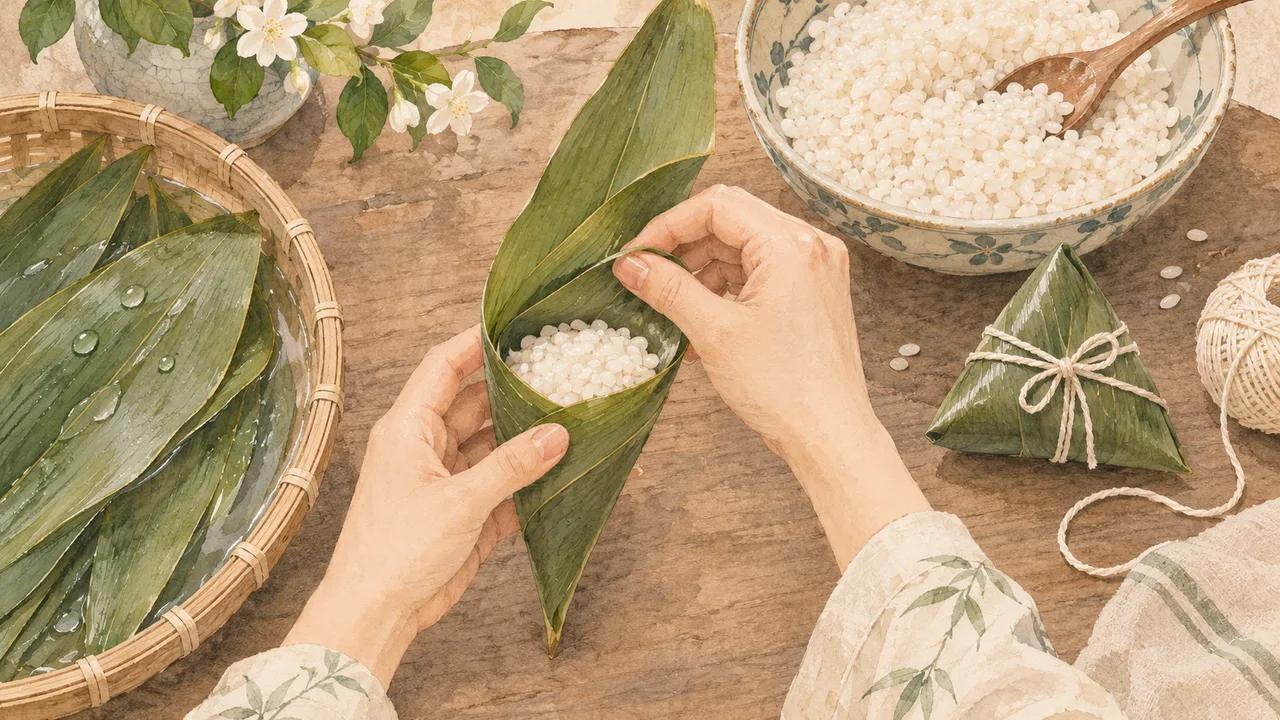
Zongzi—glutinous rice wrapped in leaves—are widely shared at Dragon Boat Festival. Fillings, leaf types, shapes, and whether they are sweet or savoury vary strongly by region and family. That variety is part of the tradition, not a contradiction of it.
Many communities also connect the fifth lunar month with seasonal care. Hanging mugwort or calamus, carrying scented sachets, and other protective customs appear in different places. These practices are often explained through traditional ideas about navigating the change into summer; they should not be treated as modern medical advice.
Four symbols of Dragon Boat Festival
Dragon boats
龙舟
Crews paddle in rhythm. Local traditions may include ceremonies before the boats race.
Zongzi
粽子
Leaf-wrapped glutinous rice parcels can be sweet or savoury. Some are shared as gifts or included in commemorations.
Mugwort and calamus
艾草与菖蒲
Some households hang these plants at the doorway in a seasonal custom associated with protection.
Scented sachets
香囊
Small cloth pouches filled with fragrant ingredients can be worn or carried as traditional protective tokens.
How to experience the festival respectfully
If you attend a local celebration, use the local programme as your guide. Some activities are public performances, while memorial rites and family observances may call for quiet attention rather than participation. Asking before photographing people, ritual objects, or food preparation is a simple courtesy.
For readers outside China, the most useful starting point is to learn the date, recognise Qu Yuan as one major cultural reference, and leave room for regional practice. The festival is not a costume or a single legend—it is a living calendar tradition carried by communities.
For mainland China, the State Council’s 2027 holiday notice lists Wednesday, June 9 as the one-day Dragon Boat Festival public holiday. This public-holiday arrangement applies to mainland China and is separate from cultural observance elsewhere.
The history behind Dragon Boat Festival
How did early texts link Qu Yuan to Duanwu?
The familiar modern story brings the death of the Chu poet Qu Yuan, racing boats and rice parcels into one narrative. Earlier texts let readers see the parts separately. As summarised by Hubei’s heritage office, Xu Qi Xie Ji describes people offering rice held in bamboo tubes after Qu Yuan’s death. The object in that account is significant: it records a form of offering rather than a description of every later kind of leaf-wrapped zongzi.
Jingchu Suishi Ji, a record of seasonal customs associated with the Jingchu region, links boat racing to the effort to rescue Qu Yuan. Its fifth-day account also records people gathering plants and hanging mugwort. The same text can therefore document a memorial story and seasonal protective practices side by side. It tells us how people explained their customs by the time the account was written.
What happens across the three Duanwu dates in Zigui?
One recorded pattern in Zigui puts the first observance on lunar month five, day five. Hanging mugwort and calamus and paying respects to Qu Yuan and ancestors are associated with this opening. The fifteenth is the middle observance, with racing as a prominent activity. The twenty-fifth closes the sequence with family reunion and local rites.
This longer calendar explains how a village can say that Duanwu is on the fifth and hold its best-known race later. The heritage account also records poetry gatherings in which local people recite writings associated with the Chu literary tradition or compose their own verse. In that setting, remembering a poet takes place in words as well as through offerings and boats.
Official heritage entry on Zigui’s three observances and poetry gatherings
Who is remembered at Duanwu outside Qu Yuan’s home region?
UNESCO’s heritage description makes the regional variety explicit. Qu Yuan is central to the traditions it describes in Hubei and Hunan. It also names Wu Zixu and Yan Hongwo in other regional traditions. A useful question when encountering a local event is therefore who the participants honour and which story they tell about their own celebration.
The same distinction applies to a race. For visitors, the most visible part may be the competition and the coordination of the paddlers. A participating community may also attach importance to a procession, a ceremony before launching the boats or a memorial on the water. The times of those events come from local programmes and can differ from the calendar date.
Questions about Dragon Boat Festival
When is Dragon Boat Festival in 2027?
Dragon Boat Festival falls on the fifth day of the fifth lunar month. In 2027, it falls on Wednesday, June 9.
Why do people race dragon boats during the Dragon Boat Festival?
A familiar tradition connects the race to people who paddled out after Qu Yuan entered the Miluo River. Boat racing also has local ceremonial and sporting meanings, and the figure commemorated can vary by region.
Why does Zigui celebrate three Duanwu dates?
The local heritage record describes observances on days 5, 15 and 25 of lunar month five. Across those days, the emphasis shifts from seasonal and remembrance customs to boat racing and then to family gatherings and local rites.
What is zongzi and why is it eaten during Duanwu?
Zongzi are glutinous rice parcels wrapped in leaves, with regional sweet and savoury fillings. One Qu Yuan legend associates rice offerings with his death. In practice zongzi also serve as festival food and gifts.
Why do people hang mugwort at the Dragon Boat Festival?
In some communities, households hang mugwort or calamus at the doorway as a seasonal custom expressing wishes for protection and well-being.
Sources and editorial scope
- Hong Kong Observatory Almanac 2026 — Calendar table covering January–December 2027.
- UNESCO: Dragon Boat festival — UNESCO inscription record and cultural description.
- Hubei Provincial Intangible Cultural Heritage: Qu Yuan’s home-region Dragon Boat customs — Heritage overview of memorial rites, protective customs, dragon boats, food, and regional practice.
- State Council: 2027 public-holiday arrangement — Official mainland China public-holiday schedule, including June 9 for Dragon Boat Festival.
- Chinese traditional festivals calendar
- Zodiac Compass methodology and calculation sources — explains the calendar range used for dates on this site.
This page is a cultural and calendar reference. It does not claim that one legend, custom, or local practice represents every Chinese community.